Schulte-Merker: Fishing for genes
Video
Fishing for genes
How cells form organs
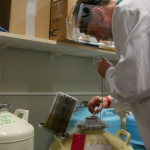
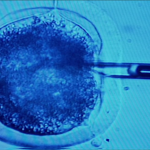
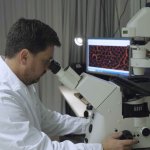
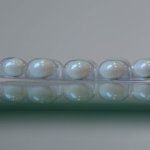
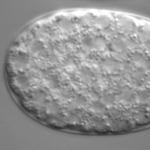
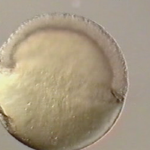
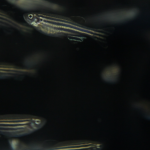
Zebrafish are famous fish. Not only because of their fancy stripes, but also because of their embryos. They develop outside the uterus and are transparent, which makes it possible for the Stefan Schulte-Merker Group at the Hubrecht Institute to investigate which genes are important for the construction and formation of organs.
Researcher
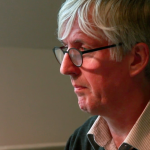
Stefan Schulte-Merker
Stefan Schulte-Merker studied biology in Regensburg (Germany), Boulder (USA) and Tübingen (Germany), where he obtained his diploma in 1988. His PhD work in the lab of Prof. C. Nüsslein-Volhard at the Max-Planck Institute for Developmental Biology in Tübingen focused on mesoderm formation in the zebrafish, his postdoctoral work with Prof. Jim Smith at the NIMR in London on growth factors in mesoderm induction. In 1995 he started his own group at the Max-Planck Institute for Developmental Biology in Tübingen, before, three years later, joining a biotech company that used zebrafish and mice for target discovery through large scale screens. He held positions of director of genetics and senior director of translational genetics at Artemis GmbH/Exelixis Inc. in Germany and San Francisco (USA), before returning to academia in 2004. He has been a staff member at the Hubrecht Institute since, pursuing his interests in vasculogenesis, lymph-angiogenesis and osteoblast function using the zebrafish as a model. In 2008 Stefan Schulte-Merker was appointed adjunct professor at Wageningen University.
Institute
Credits
Made by: Marieke Aafjes
Camera & editor: Wouter Boes
Music: Daan van West
Graphic design: SproetS
Thanks to:
The coworkers at the Hubrecht Institute
The researchers at the Stefan Schulte-Merker Group